

Estimate solar savings and costs
for your Illinois home
Save $80-$200 per month on average
Unlock solar incentives worth up to $9,894
$0 upfront if you roof qualifies
Estimate solar savings and installation costs for your Illinois home
Typical homeowners save$80-$200/mo
Unlock solar incentives worth up to $8,934
$0 upfront if your roof qualifies
No personal info required to see savings
How Do Solar Panels Work?
The sun is the most abundant source of energy we have, and modern solar technology lets homeowners tap into that power to run everyday devices—everything from your lights and refrigerator to your TV and laptop. But what actually happens inside a solar panel, and how does sunlight turn into usable electricity?
Let’s break it down. Below, we’ll explain what solar energy is, walk through how panels generate power, and outline the simple steps that bring that electricity into your home.
What Is Solar Energy?
Solar energy is power that comes from the sun—a resource we’ll never run out of. Sunlight reaches us as particles of energy called photons. When those photons hit certain materials, they can create an electrical current. This is the foundation of renewable solar power.
Solar panels use special cells called photovoltaic (PV) cells to capture sunlight and convert it into electricity. Each PV cell contains semiconductor materials—most commonly silicon—that react when exposed to the sun. The sunlight knocks electrons loose inside the cell, creating an electric charge that can flow as power.
Individual solar cells are grouped into larger modules, and multiple modules form the full panels you see installed on rooftops.
How Does Solar Power Work?
At its core, solar power works by using sunlight to free electrons from atoms, creating an electric current. That current can then be directed and used to power your home. While solar systems include several components, the actual process can be understood in five main steps:
Step 1 : Solar Panels Capture Sunlight
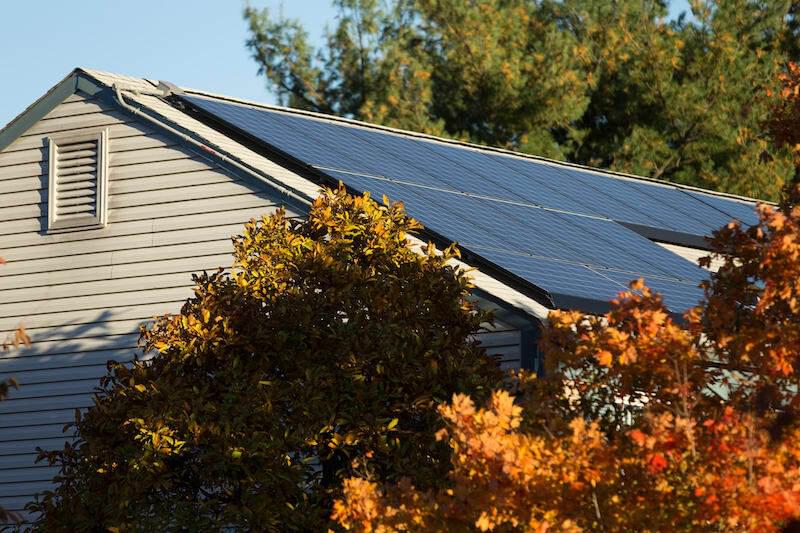
When sunlight hits a solar panel, the PV cells inside absorb photons and generate direct current (DC) electricity. Each panel contains many cells working together to collect as much sunlight as possible over the course of the day.
However, the electricity produced at this stage is DC, which isn’t what your home appliances use—so the next stage is crucial.
Step 2 : Inverters Turn Solar Energy To Usable Power
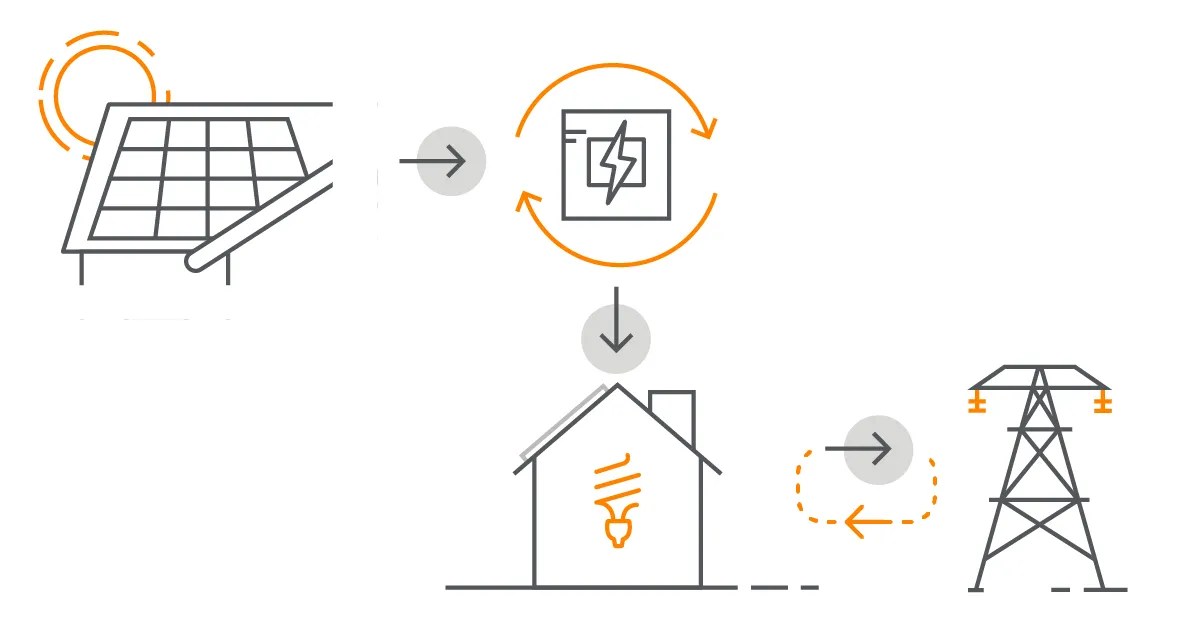
Inverters convert the DC electricity coming from the panels into alternating current (AC) electricity—the type of power your home runs on.
Some systems use one central inverter for the whole array, while others use microinverters attached behind each panel. Regardless of the setup, the inverter’s job is the same: transform the energy into AC power and route it into your home’s electrical system.
Step 3 : Solar Electricity Powers Your Home
Once converted, solar electricity moves through your electrical panel just like power from the utility company. Your appliances and devices use solar energy first, and if your panels ever produce less than you need, the grid automatically fills the gap. You won’t notice a difference—everything runs the same way it always has.
Let’s look at what happens when you produce more than you use.
Step 4 : Excess Solar Energy Flows Back To The Grid
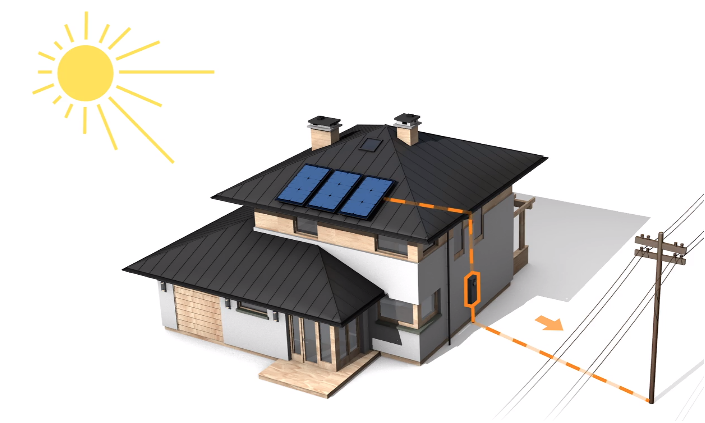
Many homeowners generate more solar power than they need during sunny hours. Instead of going to waste, that surplus electricity goes out to the utility grid. By doing so, you’re effectively helping supply clean power to your community.
This excess production is important because it leads directly to the final step: net metering.
Step 5 : Solar Production Is Tracked By A Net Meter
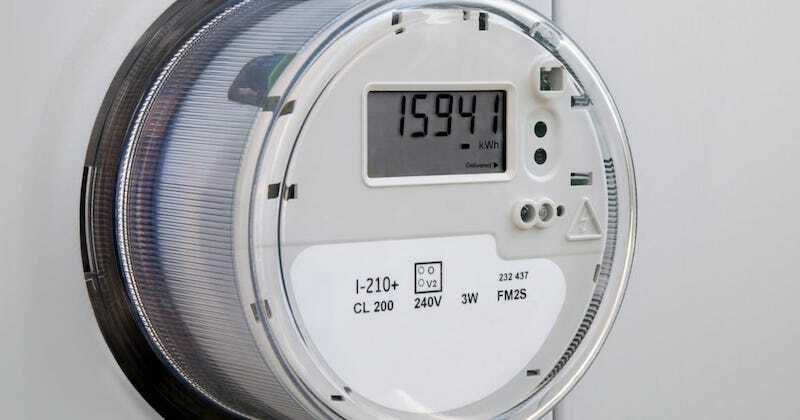
Net metering is a billing arrangement that allows you to earn credits for sending extra solar energy to the grid. These credits can help offset electricity you use at night or on cloudy days when your panels aren’t producing enough.
A bi-directional meter—installed by your utility—measures energy moving both into and out of your home. When you generate more than you consume, the meter logs those credits. In some cases, utilities will even issue a payment for surplus energy.
How Much Will Solar Panels Cost Me?
Solar costs vary from one home to another based on roof layout, system size, and energy usage. Incentives like the federal tax credit and Illinois programs can help lower the investment significantly. Because every home is different, the best way to understand your potential cost is to request a personalized estimate based on your address and utility bill.
Enter your zip code below to see projected savings and expected system pricing for your home.
Unable to find form
What Are The Different Solar Programs?
There are 3 main ways homeowners go solar...
Cash Purchase
Pay upfront. Maximize your savings
Loan
Own your system. Pay over time.
Lease / PPA
Zero down. Instant Savings.
Start your path toward big savings
With a quick online check, you can see your custom estimate and learn which incentives your home qualifies for.
Talk With An Expert
Your Privacy Matters To Us
Our Mission
We believe, given the choice, that if clean energy costs the same or less than dirty energy, consumers will choose clean energy. We're demystifying the process of solar and partnering with the best solar companies in the world.
20-year savings comparing total solar cost vs. utility cost for the same amount of electricity, including all costs, incentives, and inflation. Savings estimates do not account for utility net billing rates.